How Do You Choose the Right Garage Door Material (Steel, Wood, Composite) for Your Home?
Selecting the right garage door material affects durability, appearance, energy efficiency, and long-term cost. For homeowners in Rochester, Minnesota, the decision is even more important because the region experiences dramatic temperature swings, heavy snow, freeze–thaw cycles, and moisture exposure that can impact how different materials perform.
Steel, wood, and composite doors each respond differently to these conditions, so understanding the distinctions helps homeowners choose a door that delivers long-lasting performance without unexpected maintenance demands. This guide breaks down the key considerations that matter most in Minnesota’s climate: durability, maintenance, cost, insulation performance, aesthetics, and long-term budgeting.
What Are the Durability and Maintenance Differences for Each Material in Minnesota’s Climate?
Steel garage doors are a popular choice due to their resistance to warping, shrinking, and swelling, all of which can occur when temperatures shift rapidly. Galvanized steel with factory-baked finishes helps prevent rust, an important feature in areas where snowmelt and road salt are common. Steel can dent from impact, but routine cleaning and occasional finish touch-up help maintain the door’s appearance and prevent oxidation.
Wood doors offer a natural aesthetic but are the most sensitive to moisture. Minnesota’s humidity fluctuations and freeze–thaw cycles can cause wood to expand or contract, sometimes affecting alignment or causing surface cracks if the finish is not maintained. Regular sealing, staining, or painting is required to preserve structural integrity. Without consistent upkeep, wood is more likely to develop rot or distortion over time.
Composite garage doors provide stability without many of wood’s vulnerabilities. These engineered materials are designed to resist rot, cracking, and warping, making them well-suited for climates with wide seasonal changes. Composites maintain their shape through heat, cold, and moisture, offering long-term reliability with minimal climate-related distortion. Their construction helps them withstand fluctuations in humidity and temperature better than natural wood.
How Does Cost Vary Among Steel, Wood, and Composite Garage Doors?
Steel doors are generally the most cost-efficient option. They are available in single-layer, double-layer, and multi-layer insulated configurations, offering flexibility for different budgets and performance requirements. Even thicker-gauge or premium-finish steel doors remain less expensive than wood or high-end composite models.
Wood doors are the premium tier. Material cost, construction complexity, and finishing requirements place them at the top of the pricing range. Custom profiles, specialty woods, and decorative accents increase cost further. Homeowners should also consider long-term maintenance expenses, such as repainting or restaining, which add to overall lifetime cost.
Composite doors fall between steel and wood in price. They cost more than basic steel but less than most high-end wood models. Because composites do not require ongoing refinishing, long-term ownership costs are often lower than those of wood, making them a practical alternative for homeowners seeking durability and a high-end appearance without the recurring expense of maintaining natural wood.
What Aesthetic Considerations Should a Homeowner Think About?
Steel doors provide broad design versatility. Options include raised-panel profiles, flush panels, carriage-house designs, and modern glass-accented styles. Many Rochester neighborhoods feature steel doors because they adapt easily to varied architectural themes while remaining affordable.
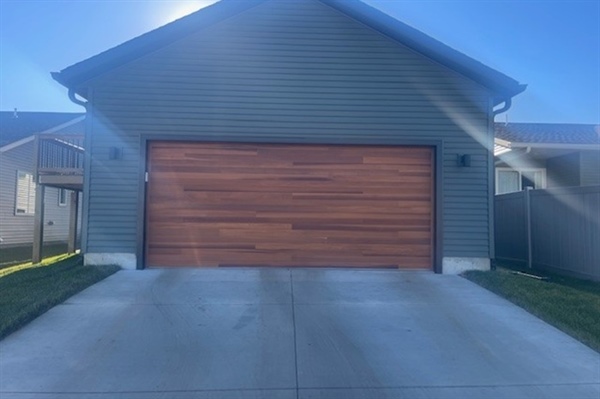
Wood doors offer unmatched visual warmth. They enhance traditional, craftsman, or historic homes where natural grain patterns contribute to curb appeal. Species selection influences the overall character — cedar for lighter tones, mahogany for darker richness, or redwood for fine grain. While visually striking, wood requires consistent finishing to preserve its appearance.
Composite doors replicate the look of wood with added stability. Textured surfaces and custom finishes allow homeowners to achieve natural-looking detail without the seasonal upkeep concerns of true wood. For those prioritizing aesthetics and resale value, composites offer a durable and visually compelling solution that withstands Minnesota’s climate more consistently than wood.
How Do Insulated Versions of These Materials Compare in Terms of Energy Efficiency?
Insulated steel doors typically provide the highest energy efficiency due to multi-layer construction and polyurethane or polystyrene cores. Polyurethane-filled steel doors, in particular, achieve high R-values because the foam bonds directly to the steel skins, reducing thermal transfer and improving rigidity. These doors help stabilize garage temperature during extreme cold and reduce heat loss into adjacent living areas.
Wood offers natural insulating properties, but performance varies with panel design and thickness. While solid wood can insulate reasonably well, older or uninsulated wood doors may allow more heat transfer. Shrinking or swelling caused by seasonal moisture fluctuations may also affect long-term insulation consistency.
Composite doors provide steady energy performance thanks to engineered cores similar to those used in premium steel doors. Their stability helps maintain tight joints and seals, reducing gaps caused by expansion or contraction. Insulated composite doors compare favorably with high-end steel doors, making them a strong option for attached garages where temperature control is important.
What Long-Term Maintenance Tasks Differ by Material and How Much Should Homeowners Budget?
Steel doors require minimal maintenance. Periodic cleaning, hinge and roller lubrication, and occasional touch-up painting for scratches or chips typically keep the door in excellent condition. Maintenance costs remain low, and repairs — such as panel replacement due to dents — are straightforward.
Wood requires the highest ongoing maintenance. Homeowners should plan for regular staining or painting to protect the material from moisture. Annual inspections help identify areas where the finish has worn thin. Without these steps, wood may develop rot, surface cracking, or warping. Budgeting for refinishing every one to two years is common in Rochester’s climate.
Composite models need significantly less maintenance. They do not require staining or painting unless a color change is desired. Cleaning and standard mechanical upkeep — such as lubricating rollers and hinges — are the primary responsibilities. Over the lifespan of the door, composite materials typically carry lower maintenance costs than wood and slightly higher than steel due to the initial purchase price.
Professional Guidance for Material Selection in Rochester
Choosing the right material involves balancing climate challenges, maintenance expectations, design goals, and long-term cost. Rochester Overhead Door Co. has extensive experience with steel, wood, and composite models and understands how each material performs in Minnesota’s demanding weather conditions.
Homeowners who want assistance evaluating material options or comparing insulated models can speak with a technician by calling 507-282-4666. To request help selecting or installing a new garage door, contact us today!