How Do Smart Garage Door Openers Compare with Traditional Models — and Are They Worth It in Rochester?
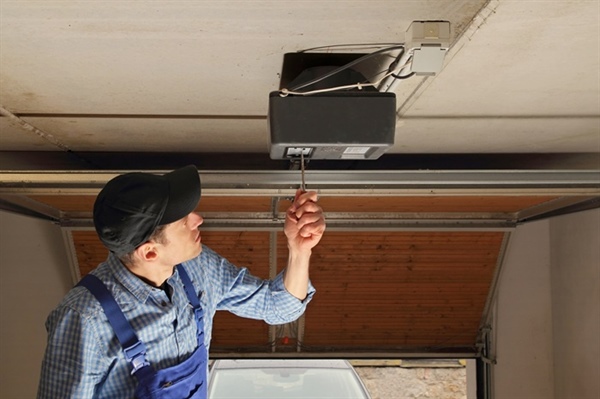
Smart garage door technology has changed how homeowners manage access to their property, but the decision to upgrade is more complex in a climate like Rochester, Minnesota.
Traditional openers still offer decades of proven service with straightforward controls and minimal electronics. Smart garage door openers add Wi-Fi connectivity, app-based management, expanded security controls, and features such as battery backup — advantages that become most obvious during winter storms, power outages, and periods of frequent travel.
For Rochester homeowners, the key question is not simply whether smart openers are “high tech,” but whether the added capabilities justify the cost and complexity when compared with standard units. That evaluation depends on the feature set, local installation and support, security posture, and performance in extreme cold.
The following sections examine what smart features matter in this market, how pricing compares with conventional models, how local providers support installation and setup, what security implications come with a connected opener, and how cold weather affects electronics and battery backup performance.
Smart Features That Matter in Rochester: Wi-Fi, Remote Access, and Battery Backup
Modern smart garage door openers combine a mechanical drive system with integrated connectivity and control electronics. Typical feature sets include built-in Wi-Fi for connection to the home network, mobile apps for remote operation, push notifications for open/close events, and integration with common voice assistants.
For Rochester homeowners, these functions are especially useful in scenarios such as leaving for work before sunrise, arriving home during a snowstorm, or checking door status during winter travel. The ability to confirm that the door is closed, or close it remotely after an alert, addresses a common gap in traditional systems, where uncertainty about door position is a frequent concern.
Another practical capability is activity logging. Many smart openers record timestamps for each open and close cycle. In a household with multiple drivers, this creates a verifiable record of usage, which can help parents confirm that children arrived home or verify that the door was not operated unexpectedly. Some platforms also support guest access, allowing temporary digital credentials instead of handing out physical remotes. These features tie directly into everyday routines and are not merely cosmetic upgrades.
Battery backup is particularly relevant in Southeast Minnesota. Outages often coincide with ice storms, heavy snow, or high winds — conditions when reliable vehicle access has high value. A smart opener with integrated battery backup can complete several cycles during a power interruption, depending on temperature and model capacity.
Traditional openers without backup require manual disengagement and lifting, which is not always convenient or safe on icy driveways or with heavier, insulated doors. When combined with local professional installation from a company such as Rochester Overhead Door Co., homeowners can select from a range of garage door openers that match both door weight and desired feature set.
Cost of Upgrading to a Smart Opener vs. Standard Units
Cost comparisons between smart and traditional openers start with the base hardware price. A conventional chain-drive or belt-drive opener with standard remotes and basic safety features typically occupies the lower end of the price spectrum. These models provide reliable lifting power and meet code-required safety standards without network connectivity or advanced diagnostics. When installed by a professional, the total project cost usually consists of the opener unit, any required mounting hardware, and labor for removal, installation, and setup.
Smart openers add cost through integrated electronics, network interfaces, expanded firmware, and often battery backup modules. The gap between a non-connected belt-drive opener and a comparable smart model can be modest when viewed against the expected service life, which often spans a decade or more.
Several manufacturers position smart variants of their mid-range and premium openers only slightly above non-smart equivalents, especially when bundled with features such as LED lighting or quieter belt drives. In practice, the incremental cost represents a small fraction of the total long-term cost of ownership for the door system.
In Rochester, the value calculation also includes operational and service considerations. Smart openers can provide early warnings for abnormal operation through error codes, alerts, or visible logs of repeated reversals. When weighed against the cost of emergency visits during winter or the inconvenience of being locked out in subzero temperatures, the premium for a smart unit often appears reasonable, particularly for attached garages or homes where the garage is the primary entry point.
Local Installation and Setup Support for Smart Openers in Rochester
Adoption of smart openers depends heavily on the availability of competent local installation and configuration support. In the Rochester market, established garage door companies have incorporated smart openers into their standard product lines. This means technicians are familiar not only with mechanical alignment and spring balancing, but also with Wi-Fi configuration, app pairing, and sensor calibration. For many homeowners, this full-scope service is the difference between an opener that simply lifts the door and a connected system that is stable and reliable over time.
Professional installers address several technical details that directly affect performance in Minnesota homes. They verify that the existing door hardware — springs, cables, rollers, and tracks — matches the opener’s rated capacity and duty cycle. They route sensor wiring and power cables to minimize interference and potential damage, and they position the opener for proper header clearance and back-hang support. When configuring smart features, they assist with joining the opener to the home’s Wi-Fi network, establishing accounts, and demonstrating use of the mobile app.
For Rochester homeowners with marginal Wi-Fi coverage in the garage, local providers can also recommend remediation steps such as moving access points, using mesh systems, or adjusting antenna orientation. This type of practical, site-specific guidance is difficult to obtain through generic instructions. Because Rochester Overhead Door Co. already manages a broad range of residential installations, the company is well-positioned to integrate smart openers into existing systems while maintaining code compliance and safe operation in local construction types.
Security Implications of Smart Garage Door Openers
Security analysis for smart openers operates on two levels: physical access control and digital access control. Physically, a garage door remains a large, movable barrier whose security depends on door construction, track integrity, locking mechanisms, and opener drive systems.
Smart functionality does not weaken these elements; in many cases, it adds operational safeguards. For example, homeowners can receive alerts if the door remains open for a defined period, then close it remotely. Traditional openers offer no native mechanism for such monitoring.
Digitally, smart openers rely on encrypted communication between the opener, the vendor’s cloud infrastructure, and user devices. Reputable manufacturers use industry-standard encryption and authentication protocols comparable to those used by online banking or other high-sensitivity applications. Risk shifts from physical capture of remotes — a common concern with older systems using fixed-code transmitters — to protection of login credentials and home network integrity. Strong passwords, proper router configuration, and multi-factor authentication significantly reduce attack surface.
Smart systems also allow more granular access control. Temporary or revocable digital keys can be issued to contractors, guests, or delivery services without handing out permanent remotes or revealing keypad codes. Activity logs document when each access occurred, which provides accountability not available in traditional setups.
As with any connected device, poor configuration or neglected updates can introduce vulnerabilities, but when homeowners follow standard security practices, smart garage door openers frequently provide a higher overall security posture than legacy openers relying on outdated remote protocols.
Cold Weather Performance and Battery Backup in the Rochester Area
Rochester’s winter climate imposes stringent requirements on both mechanical and electronic components. Low temperatures increase the viscosity of lubricants, stiffen vinyl bottom seals, and amplify resistance in rollers and hinges. This mechanical load translates directly into higher torque demand on the opener, whether smart or traditional.
Smart openers, however, can monitor motor current draw and travel behavior more closely, sometimes generating specific error codes or notifications when excessive resistance is detected. This feedback allows homeowners to identify binding due to ice buildup, misalignment, or lack of lubrication earlier than they might with a standard opener.
Battery backup behavior is particularly sensitive to cold. Battery chemistry dictates that capacity and discharge performance drop at lower temperatures. A backup unit rated for a certain number of cycles at room temperature may deliver fewer cycles when the garage is near or below freezing.
Manufacturers typically publish performance ranges; models suited to northern climates use battery types and housings designed for operation in unconditioned spaces. Regular testing — triggering operation on battery power under controlled conditions — and timely replacement according to the manufacturer’s interval are key practices for Rochester homeowners who rely on backup operation.
Electronics in smart openers must also tolerate condensation and temperature swings. Quality units use conformal coatings on circuit boards, sealed housings, and temperature-rated components to mitigate moisture intrusion and thermal stress. When combined with proper garage door maintenance — balanced springs, clean tracks, and appropriately lubricated rollers and hinges — a smart opener can operate reliably across Rochester’s full seasonal temperature range. In this context, the added diagnostic and monitoring capabilities of smart systems are not just conveniences; they function as tools for maintaining performance and safety in a challenging climate.
Are Smart Openers Worth It in Rochester?
For homeowners in Rochester, the decision to move from a traditional opener to a smart model hinges on usage patterns, tolerance for risk during outages, and interest in remote visibility and control. Smart openers deliver tangible advantages: confirmations and alerts regarding door status, managed guest access, integration with broader smart home platforms, and detailed diagnostics that support proactive maintenance.
Rochester Overhead Door Co. can help homeowners match opener capabilities to door design, local climate challenges, and household expectations. With product lines that include both conventional and smart garage door openers, plus professional installation and support, we offer a pathway for Rochester residents to adopt connected technology at a pace and scope that aligns with their needs while maintaining the mechanical reliability that has always defined a well-designed garage door system.